LYNAVOY was studied in a clinical trial to understand its impact on itch and sleep in patients with PBC itch

How was LYNAVOY studied?

GLISTEN: LYNAVOY clinical trial design
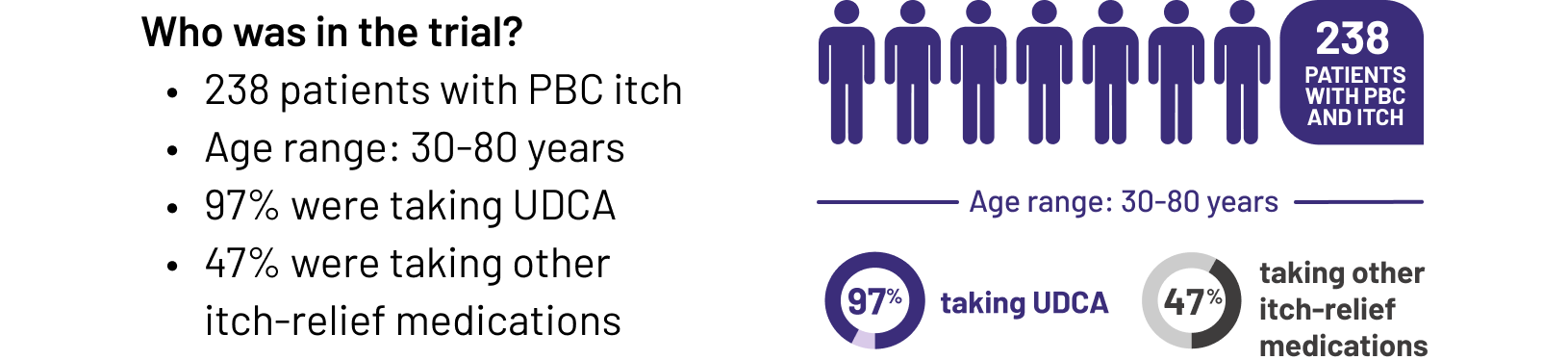
Who was in the trial? 238 patients with PBC itch. Age range: 30-80 years. 97% were taking UDCA. 47% were taking other itch-relief medications. How was the trial conducted? Trial lasted 24 weeks. Half of patients received LYNAVOY, half received placebo.

Who was in the trial?

  • 238 patients with PBC itch
  • Age range: 30-80 years
  • 97% were taking UDCA
  • 47% were taking other itch-relief medications
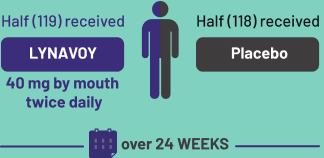
How was the trial conducted?

  • Trial lasted 24 weeks
  • Half of patients received LYNAVOY, half received placebo
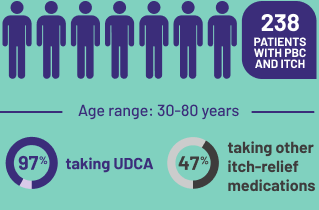
238patients with PBC and itch

Age range: 30-80 years

97%

taking UDCA

47%

taking other itch-relief medications

Half (119) received

LYNAVOY 40 mg by mouth twice daily

Half (118) received

Placebo

over 24 weeks

This trial was a double-blind study, meaning neither patients nor doctors knew who was getting LYNAVOY.

  • In general, this helps reduce bias in clinical studies

GLISTEN = Global Linerixibat Itch Study of Efficacy and Safety in Primary Biliary Cholangitis; UDCA = ursodeoxycholic acid.

How did LYNAVOY perform in the clinical trial?

Itch relief results

In the GLISTEN study, patients rated their worst itch on a scale from 0 (no itching) to 10 (worst imaginable itching). The average starting itch score was 7.3.
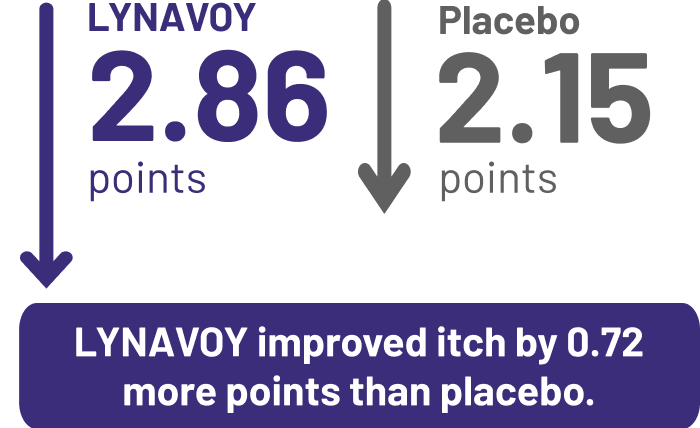
Graphic showing change in weekly itch score over 24 weeks

Over 24 weeks:

  • LYNAVOY improved itch by 2.86 points (nearly 3 points on the 0-10 scale)
  • Placebo improved itch by 2.15 points
  • LYNAVOY showed a greater improvement in itch, with an additional improvement of 0.72 points compared to placebo
  • This difference was statistically significant, meaning it was very unlikely to be due to chance
  • On average, patients treated with LYNAVOY reduced itch from a score of 7.33 to 3.80 vs placebo (7.36 to 4.52)
  • At Week 2, LYNAVOY reduced itch more than placebo

Rapid itch relief as early as 2 weeks. Sustained itch relief through 24 weeks.

What were some other results in the clinical trial?
Sleep relief results

The GLISTEN study also measured how much itching interfered with sleep, using a scale from 0 (no sleep interference) to 10 (completely interfered with sleep). The average starting sleep interference score was 6.3.
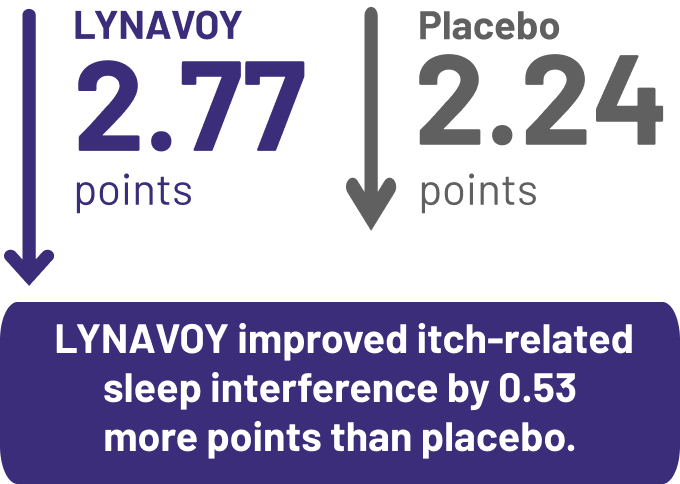
Graphic showing change in sleep score over 24 weeks

Over 24 weeks:

  • LYNAVOY improved sleep score by 2.77 points
  • Placebo improved sleep score by 2.24 points
  • LYNAVOY showed a greater improvement in itch-related sleep interference, with an additional improvement of 0.53 points compared to placebo
  • This difference was statistically significant

Patients taking LYNAVOY significantly improved itch-related sleep interference compared to placebo over 24 weeks.

Important Safety Information

Before using LYNAVOY, tell your healthcare provider about all of your medical conditions, including if you:

  • are pregnant or plan to become pregnant. It is not known if LYNAVOY will harm your unborn baby.
  • Pregnancy Safety Study: Pregnancy outcomes in women who become pregnant while using LYNAVOY is being collected. The purpose of this is to collect information about your health and your baby’s health. You or your healthcare provider should report your pregnancy by calling 1-888-825-5249.
  • are breastfeeding or plan to breastfeed. It is not known if LYNAVOY passes into your breast milk. Talk to your healthcare provider about the best way to feed your baby while using LYNAVOY.

Tell your healthcare provider about all the medicines you take, including prescription and over-the-counter medicines, vitamins, and herbal supplements. LYNAVOY and certain other medicines may interact with each other. Especially tell your healthcare provider if you take:

  • bile acid binding resins (used to reduce absorption of bile acids from the intestine), such as cholestyramine or colesevelam. These may reduce the effects of LYNAVOY. If you take any of these medicines, take LYNAVOY at least 4 hours before or 4 hours after taking a bile acid binding resin.

What are the possible side effects of LYNAVOY?

LYNAVOY may cause serious side effects, including:

  • Increased liver enzymes. An increase in liver enzymes (liver-related blood tests) can happen in people who use LYNAVOY and can be serious. Your healthcare provider will do blood tests to check your liver before starting treatment and during treatment with LYNAVOY. Your healthcare provider may need to stop your treatment with LYNAVOY because of an increase in liver enzymes.
  • Diarrhea. Diarrhea can happen in people who use LYNAVOY and can be serious. Diarrhea can cause a loss of body fluid (dehydration). Check for signs of dehydration including thirst, dry mouth, urinating less often, or headache. Call your healthcare provider if you have diarrhea that does not go away.
  • Fat-Soluble Vitamin (FSV) Deficiency. A condition called FSV deficiency caused by low levels of certain vitamins (vitamin A, D, E, and K) stored in body fat, can happen with LYNAVOY. Your healthcare provider will do blood tests for FSV deficiency before starting and during treatment with LYNAVOY. People with FSV deficiency can bleed more easily or bleed longer or may develop bone fractures. Call your healthcare provider if you have bleeding problems or a bone fracture while using LYNAVOY.
  • The most common side effects of LYNAVOY include:
    • diarrhea
    • stomach pain
    • nausea
    • bleeding
    • increased liver enzymes (ALT, AST)
    • headache
    • upset stomach
    • gastroesophageal reflux disease
    • stomach bloating
    • dizziness
    • joint pain

These are not all the possible side effects of LYNAVOY. Call your doctor for medical advice about side effects. You may report side effects to FDA at 1-800-FDA-1088.

Please see the full Prescribing Information for LYNAVOY.

What is LYNAVOY?

  • LYNAVOY is a prescription medicine used to treat itching (pruritus) in adults with primary biliary cholangitis (PBC).
  • LYNAVOY is not for use in people with severe liver disease (decompensated cirrhosis), or people who have or have had certain liver-related problems including bleeding of enlarged blood vessels in the stomach-area (variceal hemorrhage), fluid in the stomach-area (ascites), or nervous system problems (such as confusion, slurred speech, sluggish movements) caused by severe liver disease (hepatic encephalopathy).
  • It is not known if LYNAVOY is safe and effective in children.

You are now leaving this site.

We do not review or control the content of external websites, and this hyperlink link does not constitute an endorsement of the site’s content.

Proceed to external website